Start here
Polka is a lively couple dance in 2/4 time and the music written for it. It began in central Europe in the 1800s and traveled with migrants to the Americas and beyond, where every community that took it up gave it a local accent. Today you can hear it at community dances, heritage festivals, weddings and parish halls, often next to waltzes, schottisches and other folk dances.
These guides cover the music and the dancing for complete beginners. Nothing here assumes you read music or have danced before.
A short history of polka
Where the dance came from and how it spread with migrants and sheet music.
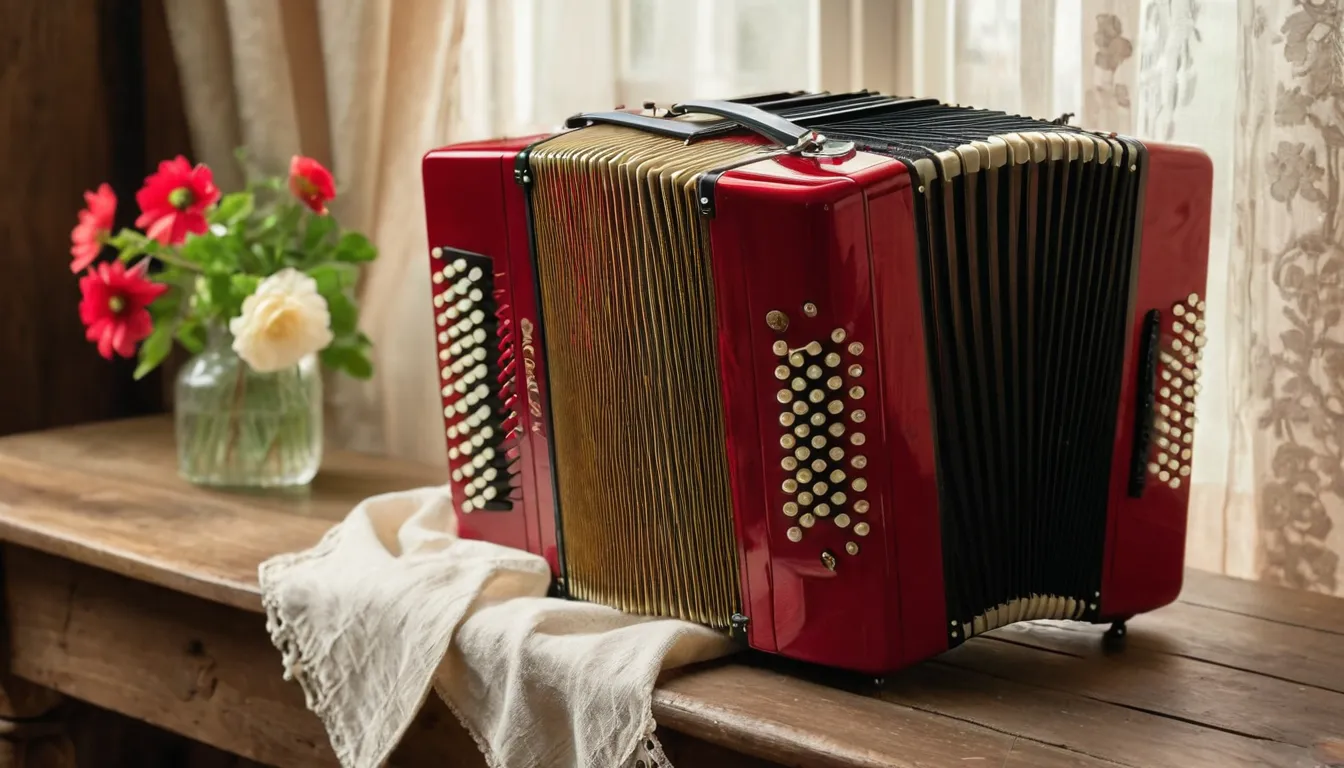
The accordion
How free reeds, bellows and bass buttons work, and the main kinds of accordion.
The folk fiddle
The same instrument as the violin, played with different habits and tunings.
Brass and wind
Tuba, trumpet, clarinet and the rest of the band that makes the oom-pah.
Polka, waltz and other rhythms
Count the beat in 2/4 and 3/4 and hear where the accents fall.
Learn the basic polka step
Hop, step, close, step, counted out one beat at a time.
Waltz, schottische and more
Four more steps you will meet at a folk or old-time dance.
Find a local group
Use library, parks, arts council and folklife directories to find dances near you.
Read a step chart
Each dance guide uses a step chart like the one below. Read it left to right. The top line is the count you say out loud, the colored circle is the foot that moves, and the word underneath is the move. Green is the left foot and red is the right. Faded circles are small moves such as a hop, and a dark line marks the end of a bar of music.
- &Lhop
- 1Rstep
- &Lclose
- 2Rstep
- &Rhop
- 1Lstep
- &Rclose
- 2Lstep
Left footRight footHop or pause
The polka step guide walks through this pattern slowly, with a simpler version to learn first. The rhythm guide uses the same cells to show which instruments play on which beat.
What gives polka its sound
Most polka bands split the work in two. A bass instrument, often a tuba or the accordion's left hand, plays on the main beats. Chords answer on the offbeats, which gives the bouncing "oom-pah" pattern. Over the top, an accordion, fiddle, clarinet or trumpet carries the tune. The guides to the accordion, the fiddle and brass and wind explain what each instrument does in the band.
Find people to play and dance with
Folk music is easiest to learn in company. Many towns have a folk dance club, a heritage society that holds dances, or a session where amateur players meet to play tunes together. These groups rarely advertise widely, so the best leads come from public sources: your library's events calendar, the parks and recreation program guide, and your state's folk arts program. The guide to finding local groups shows where to look and what to ask, and the page on your first community dance covers what to expect when you go.
Common questions
Do I need a partner to go to a polka or folk dance?
Usually not. Many community dances expect people to arrive alone and change partners between dances. Circle and line dances need no partner at all.
Is polka only from Poland?
No. Despite the similar names, most accounts place the dance's origin in Bohemia, in today's Czech Republic. It then spread across Europe, including Poland, and to the Americas. The history page has more.
Do you list bands or events?
No. Bands and schedules change often, so we point you to the public directories that keep current listings. See about PolkMusic.